There is a fortnight each spring when an ordinary beech wood becomes the best landscape subject in the country. The bluebells arrive quickly, the canopy is still open enough to let light reach the forest floor, and then the whole thing is over for another year. Turn up a week late and you will photograph stems, dead foliage and the back of someone else's tripod.
What follows is a working checklist for that window: how to time it, what light to wait for, which lenses genuinely help, how to get down to flower height without flattening the thing you came to photograph, and how to leave the wood in a state worth returning to next April.
Time the window, not the date
Bluebells do not read a calendar. In sheltered, low-lying woods in the south-west, the first blue haze can appear in mid-April. In northern woods, or anywhere with altitude, it can be three or four weeks later. Aspect matters as much as latitude: a south-facing slope warms noticeably earlier than a north-facing one a few hundred metres away.
The most reliable signal is the trees themselves. Bluebells flower in the gap between the soil warming up and the canopy closing over. Watch for beech and oak leaves just beginning to unfurl, at that stage where the wood still feels open and airy. When the canopy knits together fully, the colour down below starts to fade and the light turns flat and green.
If you have a wood within reach, visit it weekly from early April. Note what you see — bare ground, first spikes, first colour, full carpet, fading — in your phone or a small notebook. Two or three seasons of those notes will tell you more about your local timing than any forecast.
Weather worth getting up for
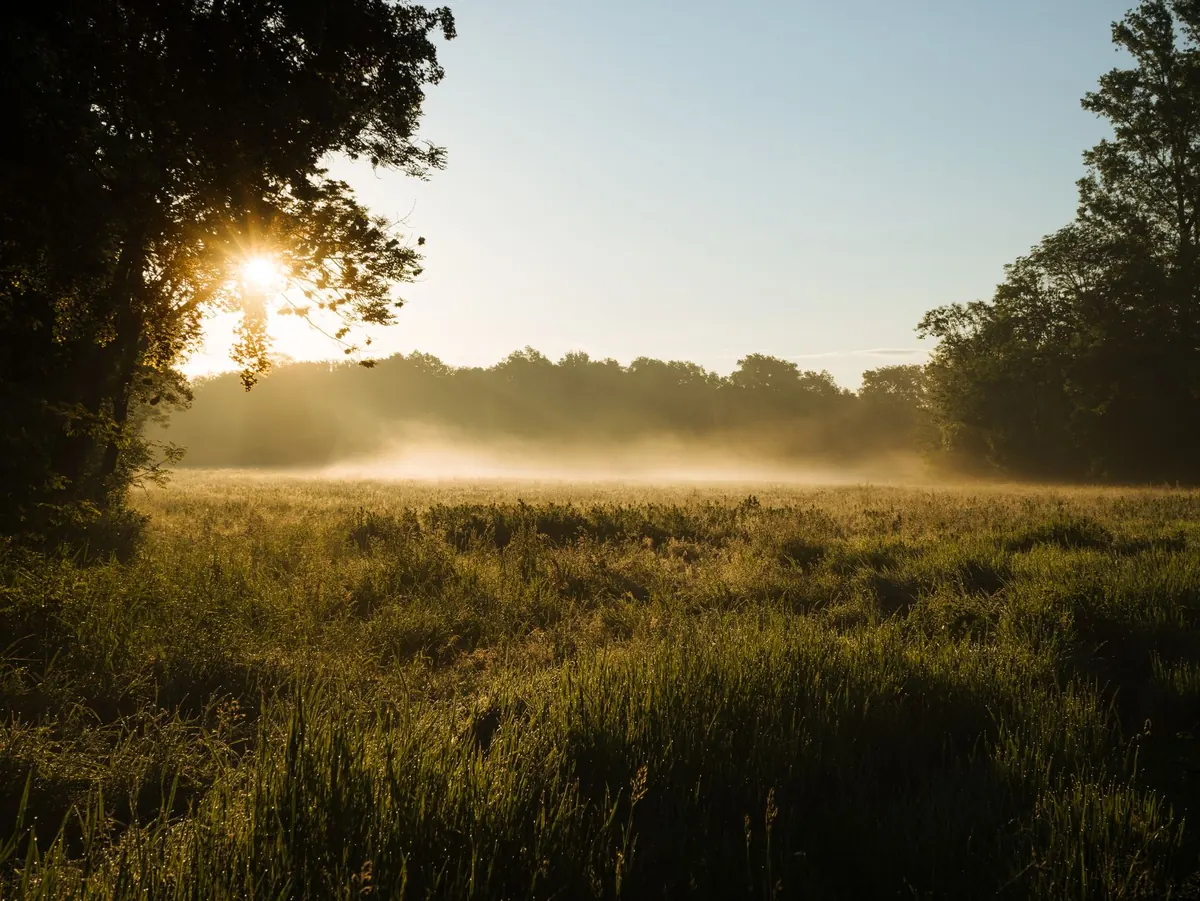
Still, damp mornings beat bright ones almost every time. A cool night following a warm day often leaves mist sitting in the hollows, and that mist does two useful jobs at once: it softens the light and it separates the trunks into layers, giving depth to a wood that can otherwise read as a tangle.
Heavy overcast works well too, particularly after rain. Colours saturate, highlights stay under control, and you can shoot for hours rather than minutes. Bright sun and a breeze are the difficult combination: blown patches of sky through the canopy, dappled light scattering across the flowers, and stems moving during every exposure.
Read the light before you set up
Walk the wood first with the camera on your shoulder. Look for the brightest thing in the frame — usually a gap of sky between branches — and decide whether it is helping or ruining the picture. It is often worth turning the camera slightly to keep that patch hidden behind a trunk.
A polariser earns its place in bluebell woods. It cuts the sheen on wet leaves and deepens the blue without the plastic look that heavy editing creates. Rotate slowly and check the effect on the greens as well as the blues; over-polarised foliage can go almost black. Keep a lens hood on and watch for flare when shooting towards the light, and shield the front element with your hand if the hood is not enough.
Kit that earns its weight
- A wide zoom (roughly 16–35mm on full frame) for drifts of flowers running away from you into the trunks.
- A mid-range zoom (24–70mm) for the compositions that include one strong tree, a path or a fallen log.
- A short telephoto or a fast prime for compressing the carpet into dense layers — and for reaching into the wood without walking into it.
- A close-up lens or macro for single stems, drooping heads and dew, which is often the most original picture of the day.
- A tripod that goes genuinely low, or a beanbag if your tripod does not splay flat.
- A kneeler, mat or bin bag to keep your knees off the flowers, plus a head torch for the walk in.
Getting low without flattening the wood
Most disappointing bluebell photographs are taken from standing height. From up there, the flowers read as a thin blue strip along the bottom of the frame. Drop the camera to flower height and the same scene becomes a sea you can wade into.
Splay the tripod legs wide and use the shortest column position you have, or rest the camera on a beanbag on bare ground. A flip-out screen makes this far easier; if you do not have one, you will be lying on a path. Compose with the camera just above the tallest heads, tilting very slightly down or level, and keep the horizon low in the frame. For a carpet running away from you, focus roughly a third of the way in and stop down to around f/11; for close work, focus stacking three or four frames will keep a single stem sharp from the curve of the head to the leaves.
Compositions to hunt for
- A single stem or a pair, backlit, against a dark trunk or shadow.
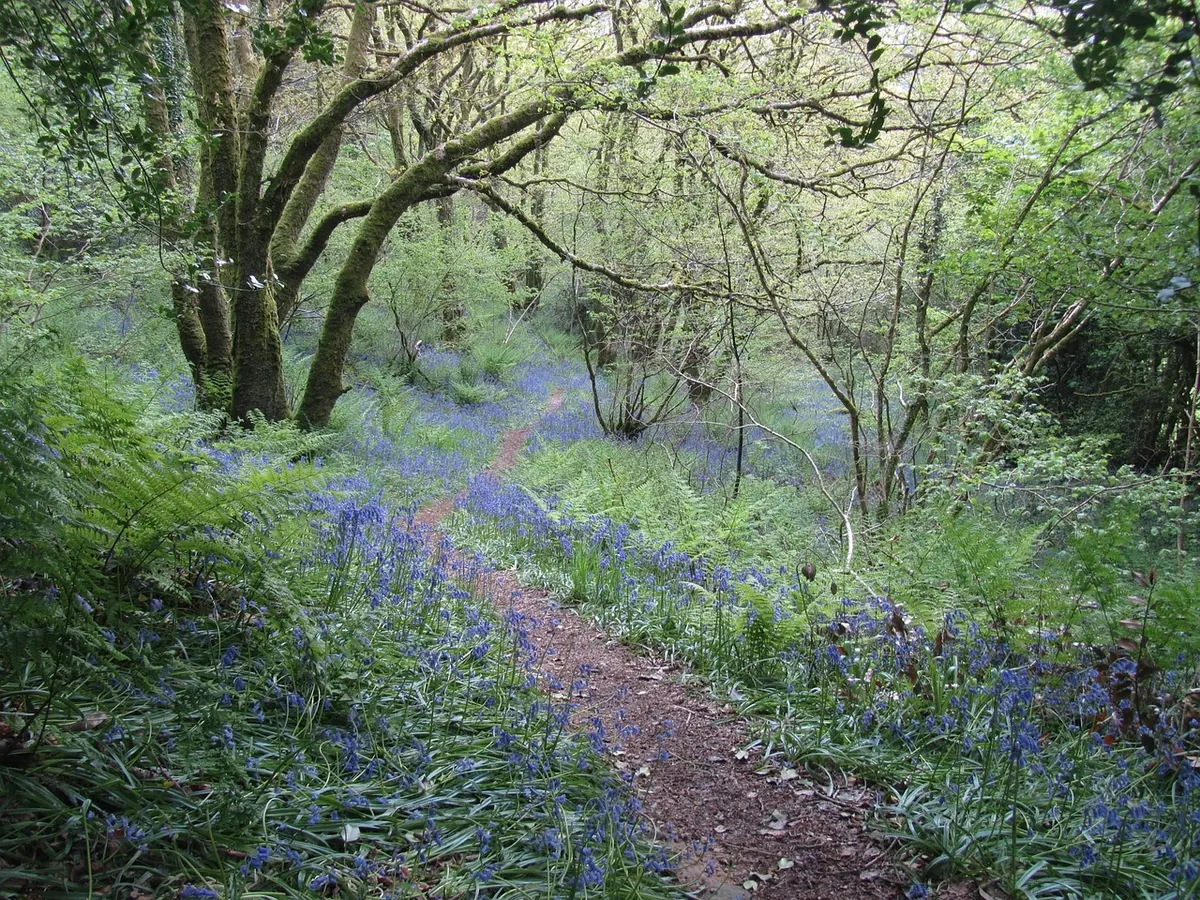
- A path or ride curving through the blue, giving the eye a route in.
- A mossy stump or fallen branch as an anchor — blue on its own becomes soup.
- Two trunks framing a gap full of flowers and mist.
- One brighter element at mid-distance, a pale birch or a patch of light, to give scale.
Protecting the bluebells — and your access
Bluebell bulbs sit shallowly, and a compressed patch takes years to recover; the leaves need to photosynthesise and store energy for the following spring. So stay on paths and bare ground wherever you can, kneel on a mat rather than in the flowers, and never lie down in a drift to get the shot.
Take nothing. Native bluebells are protected in the UK and it is against the law to dig up bulbs from the wild. Picking them is just as pointless — they wilt within the hour.
Check access before you go: many woods are private, some are managed by charities with car parks and opening times, and spring is nesting season, so keep dogs close and keep drones on the ground. Leave gates as you find them, park so that farm vehicles can pass, and if a ride is closed, walk the long way round.
A short field checklist
- Check the wood midweek and arrive before sunrise for mist and stillness.
- Walk the site without the camera and choose two or three compositions.
- Set base ISO, f/11 and a two-second delay or remote release.
- Expose for the flowers and check the histogram for clipped sky.
- Shoot one wide, one mid and one close-up of each scene before moving on.
- Check the frame edges for crushed stems, litter or your own tripod bag.
When you get home
Bluebells are more violet than pure blue, and the temptation is to push the blue channel until the wood looks radioactive. Resist it. Set the white balance from a neutral point, lift the shadows gently, and compare the greens in your file with what you remember of the wood — muted, cool, slightly grey under the canopy. If the foliage has gone neon, you have gone too far.
Then note the date, the weather and the state of the canopy. Next spring, you will know exactly which morning to set the alarm for.
Photo: glarcombe / Pixabay