Three words get used almost interchangeably by photographers, and the difference matters more than pedantry. Stand on a hillside at dawn and the air around you might be a soft, breathing mist. Drive twenty minutes into the valley and you can be inside fog so thick that road signs vanish. Point a long lens at a distant ridge on a warm afternoon and the pale wash across everything is haze. Each one reveals a landscape differently, and each rewards a different way of working.
Knowing which one you are standing in, or which one is sitting between you and the hills, tells you what to photograph, what to leave out, and how long you have before it all changes.
Mist, fog and haze: the working definitions
Weather services split mist and fog by visibility. Fog is the denser of the two: in UK forecasting terms, visibility below about 1,000 metres. Mist sits above that, roughly one to two kilometres, and often shows as a shallow layer you can see through in patches.
Both are made of the same thing, tiny water droplets suspended in cool, still air near the ground. The useful difference for a photographer is how much of the world they take away from you.
Mist
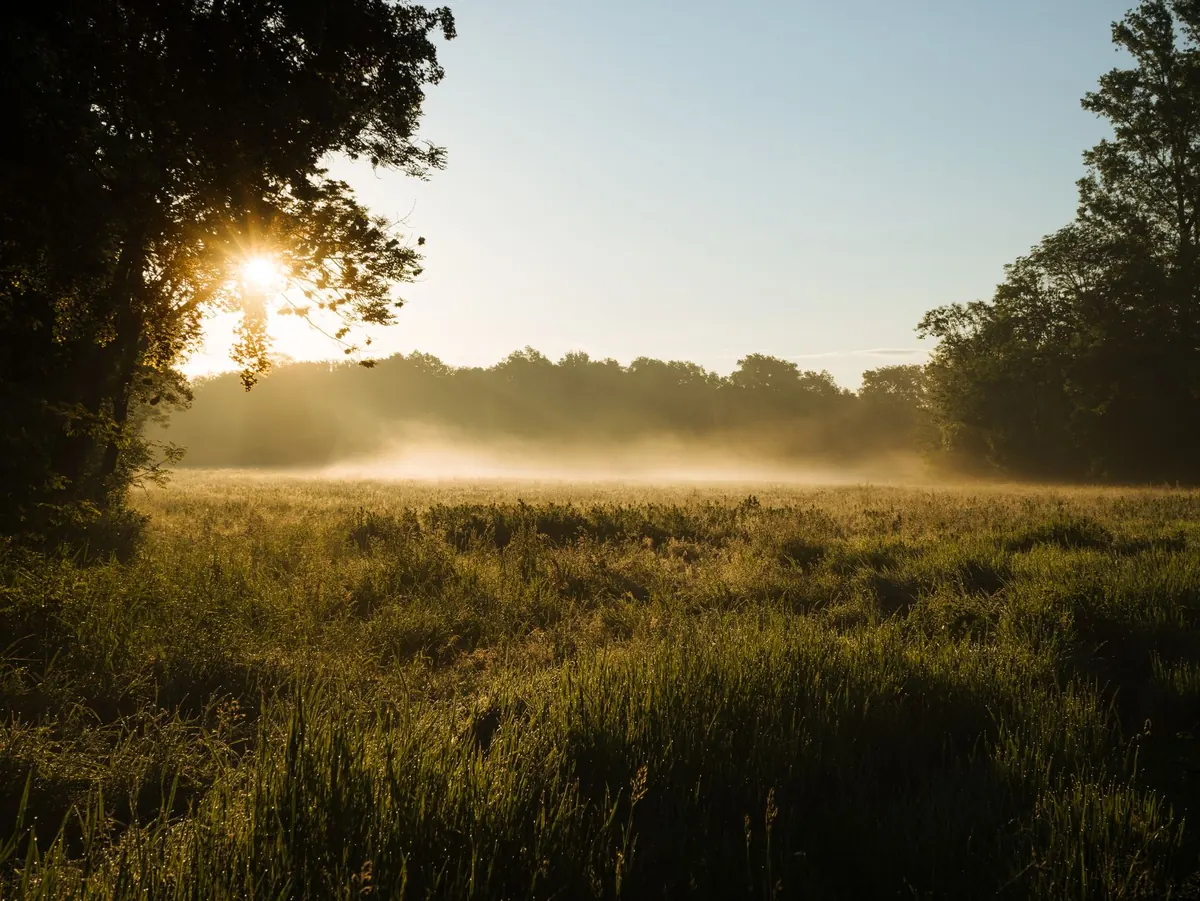
Fine, patchy and mobile. It forms over water, in valleys, after rain, on cold mornings with barely any wind. It drifts, thins and re-forms while you watch, which makes it the most photographically generous of the three. You keep your depth, so trees, hills and fence posts still read as separate layers, but every one of them is softened.
Fog
Dense and close. Not a veil but a wall. Beyond twenty or thirty metres there is simply nothing, so composition becomes an exercise in isolation: a gate, a single tree, a figure on a path. Fog is wonderful when you have a strong subject and frustrating when you were hoping for a vista.
Haze
Different in origin. Haze is dry, made up of dust, pollen, smoke, salt or pollution suspended in the air, and it usually hangs over long distances rather than sitting on the ground in front of you. It has no edge and no depth boundary, and it often carries a warm tint in late light.
What each one does to the light
Mist and fog turn the whole sky into one enormous softbox. Contrast collapses, shadows almost disappear and colour drains towards blue-grey. That sounds like a loss, and in flat overhead conditions it can be. But it also strips a scene back to shape and tone, which is where the good pictures live.
Shoot into the sun and the rules invert. Backlit droplets glow, the air itself becomes the brightest thing in the frame, and you get the beams and haloes that draw people to misty mornings in the first place. Side light rakes across tree trunks and picks out individual bands of vapour.
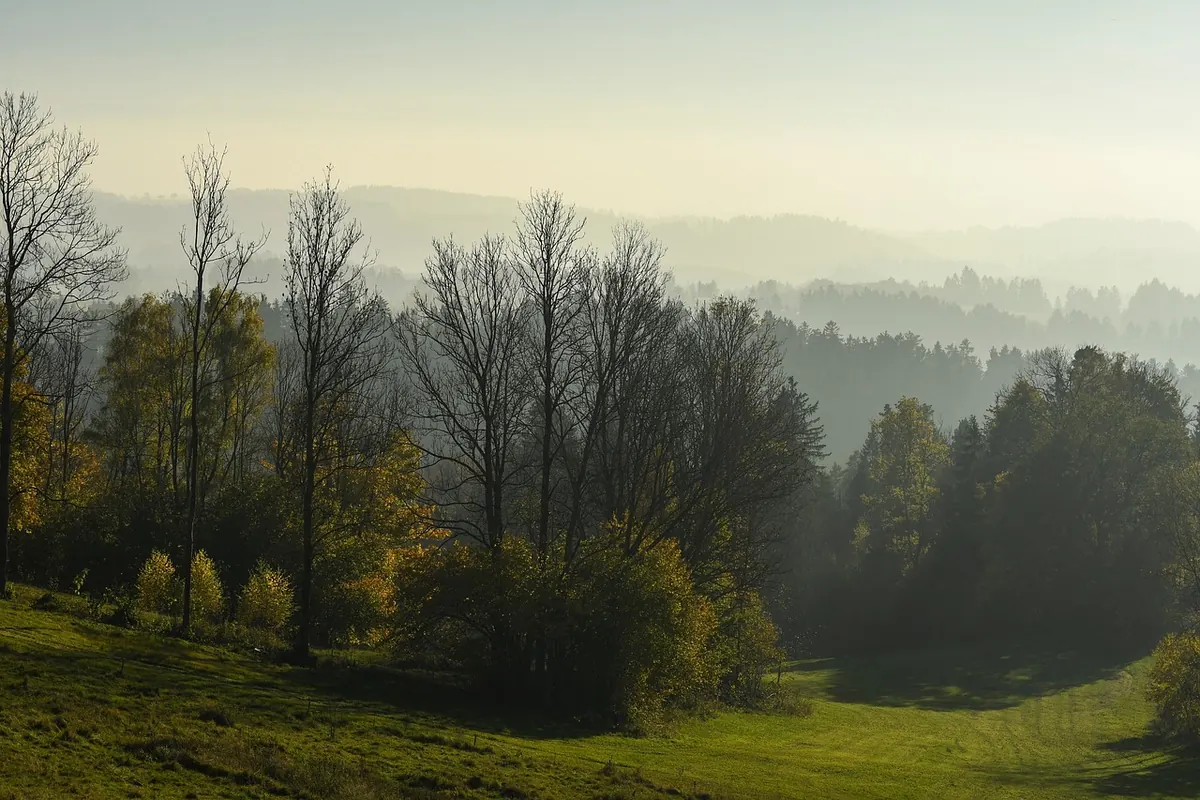
Haze behaves quite differently. It barely softens the light falling on your foreground. What it does is remove contrast from distance. The near field stays saturated and sharp while the far hills go pale and simple. That is aerial perspective, exaggerated: a depth cue rather than a diffuser.
Five moves that work in all three
- Build in layers. Aim for three or four planes, each one lighter and softer than the one in front. The eye reads that progression as distance.
- Anchor the frame. Pale air needs something dark and solid, such as a trunk, a wall, a rock or a silhouette, or the picture floats away.
- Protect your highlights. Bright mist fools a camera meter into underexposing, turning white air into grey mud. Check the histogram and add exposure compensation until the brightest mist is almost, but not quite, blown.
- Switch to manual focus. Autofocus hunts in low-contrast air. Focus on the nearest hard edge you have, then stop down for depth.
- Reach for a longer lens. A telephoto compresses the layers and stacks them, which is often more striking than a wide view of the same scene.
Which conditions suit which subject
Mist over still water is the classic reflection shot. Get low, put the shoreline on a third and let the far bank dissolve. Frost and mist together turn a familiar field into something graphic, especially if you are there before the sun lifts the layer.
Fog is for minimalism and for woodland. Walk in, find one trunk or one gate, and let the rest be blank. It is also the best condition for photographing people in a landscape, because they appear as shapes rather than as subjects.
Haze suits ridges, coastlines and layered hills shot long. It is a gift at sunset too, when a warm afternoon haze turns the sky and the far country orange while the foreground stays rooted and contrasty.
Timing, forecasts and the ten-minute window
Most good mist comes from a simple set of conditions: a clear night, light wind, cool air and a damp surface such as grass, water or wet ground. Where the air temperature and the dew point are within a degree or two of each other, expect droplets to form. Valleys and riversides get it first and keep it longest.
Be on location before sunrise. The half hour around dawn is usually the richest, and the burn-off can be brutally quick. A scene you have spent an hour composing can vanish in ten minutes as the sun lifts the layer. Shoot the frame, then work the variations, wider and closer and tighter, while you still can.
Keep a cloth in your pocket, let the camera acclimatise before you take the lens cap off, and carry spare batteries. Cold, damp air drains them faster than you expect and fogs front elements just as quickly.
What to do with all this
Check the forecast the night before, pick a valley or a lake rather than an open hilltop, and be in position well before first light. When you arrive, decide which of the three you are actually in, because that decision shapes everything else: which lens, how much sky, how close you go, how much you leave out. Then watch what the air does next. The best frame of the morning is usually the one taken just before it clears.
Photo: BernhardFalkinger / Pixabay